Leadership for an evolving industry
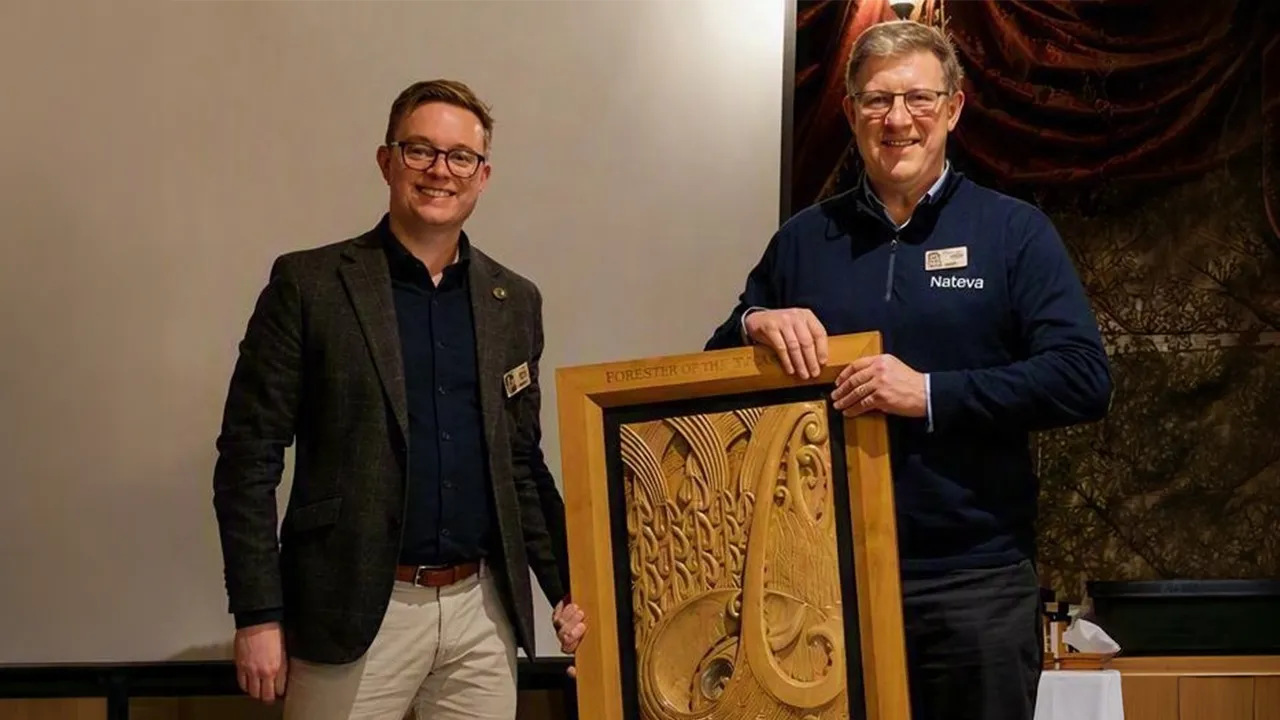
At a time when professional standards and public confidence in the forestry sector have never been more important, newly named New Zealand Forester of the Year, Nateva CEO Peter Casey has been recognised for consistently promoting evidence-based decision making, management discipline and professional accountability.
Peter was awarded the Forester of the Year 2026 title at the New Zealand Institute of Forestry (NZIF) conference, held in Dunedin at the end of August. NZIF highlighted Peter’s role in strengthening the Registered Forestry Professional designation and the organisational capability that supports it, as well as making a significant contribution to the future of the industry by supporting emerging forestry professionals.
Peter says forestry professionals have a key role to play in the sector, not only in maintaining confidence in a key land use that is under increasing public scrutiny, but in leading the evolution of the models and approaches that have dominated the sector for over four decades.
“Forestry in New Zealand has for the last 40 years been split, with industrial plantation forestry and conservation forestry sitting in apparent opposition,” says Peter.
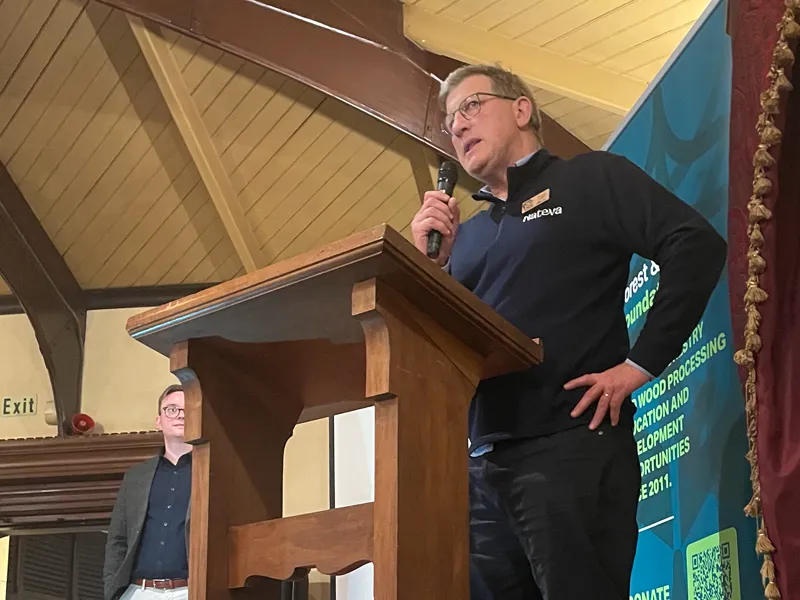
This paradigm is increasingly inadequate, according to Peter, as all forests now exist in an environment that is highly modified and rapidly changing.
“Extinctions, climate change, biodiversity loss, introduced species, evolving community expectations and dynamic markets are all playing a role in the changes we are seeing across our forest environments,” says Peter.
“So as an industry we have to change, with the changing reality of our environment – especially as we’re entering a period where there is no past experience to guide us. And while confronting, this opportunity to rewrite our New Zealand approach is perhaps the most exciting thing for our sector, especially for someone just embarking on their forestry career.”
Someone with that perspective is Nateva forestry intern, Armani Tohaia, who is completing her third year of study at University of Canterbury’s School of Forestry.
The third generation of her family to undertake a forestry career, Armani says she was particularly drawn to the diverse job opportunities available in forestry and the balanced curriculum, which combines classroom learning with practical outdoor experiences.
“I think forestry is always changing,” says Armani. “We learn about that in the classroom, and in my work with Nateva you can see the different options for the management of species becoming more blended.”
Peter says Armani’s generation of foresters will be working in forests that are more diverse, multifunctional, perhaps even unfamiliar to those who have worked for decades in the sector .
“We expect to see a greater range of systems and more blending between those models,” says Peter. “Mixed-species plantations; indigenous-exotic hybrid systems; continuous cover forestry; silvopastoral systems; and permanent forest estates – all will have a role in our sector, and our environment.”
In response, Peter says foresters will need to be more comfortable with change.
“They’ll need to recognise the reality of our shifting environment and operating environment. They’ll need to be comfortable with a broad spectrum of forest types – and the interplay between them. And their management strategies will have to adapt to reflect our changing environment, and a much wider range of roles for the new forests and how they are customised to often complex landscapes.”
The NZIF says this dynamic approach to the industry and the changing environment it works in was part of what garnered Peter the title Forester of the Year.
“In recent years, forestry has been at the centre of intense debate around permanent forests, exotic species, native regeneration, carbon income, land use change and active forest management.”
“[Peter] has responded to evolving legislation, increased public interest in forestry advice, higher expectations around professional competence, and the ongoing need to maintain confidence in the Registered Forestry Professional designation. His judgement, persistence and commitment to professional integrity have been central to this work.”
Peter says the Nateva team played a key role in the recognition he has received, and dedicated the award to the talented group of people he works alongside in the organisation.